
The origin story
How
we got
here.
A story approximately 66 million years in the making. We'll try to keep it brief. (We won't keep it brief.)
Something to really
Shmaak!
66 M
BC
Late Cretaceous Period
It Begins
The dinosaurs had on job.
The story of Clearly begins, as most great stories do, with a mass extinction event. The Chicxulub impactor — a asteroid approximately 10 kilometres wide — made contact with the Yucatán Peninsula at roughly 20 kilometres per second, releasing energy equivalent to several billion nuclear warheads simultaneously.
The non-avian dinosaurs, including the Tyrannosaurus rex, Triceratops horridus, and the deeply underrated Ankylosaurus magniventris, did not survive. This was unfortunate for them but, as we'll come to understand, critically important for us.
The point is: the earth was reset. The slate was clean. Something better was coming. It would just take a while.
Note from the founders
We're aware this has nothing to do with caffeinated water yet. Stay with us. We're building to something.
56 M
BC
Eocene Epoch
Getting Warmer
Enter: The Caffeine Plant.
Approximately 56 million years ago, following the Paleocene-Eocene Thermal Maximum — a period of rapid global warming that even the most dramatic climate scientists would describe as "a lot" — the first caffeine-producing plants began to evolve.
Coffea arabica's ancient ancestors were doing what plants do: competing for survival by developing chemical compounds that deterred insects, attracted pollinators, and in time, became the most socially acceptable dependency known to human civilisation.
The Camellia sinensis — green tea — was doing the same, quietly developing L-Theanine alongside its caffeine. As if it already knew, 56 million years before anyone asked, that the two compounds worked better together. Plants are remarkably forward-thinking.The non-avian dinosaurs, including the Tyrannosaurus rex, Triceratops horridus, and the deeply underrated Ankylosaurus magniventris, did not survive. This was unfortunate for them but, as we'll come to understand, critically important for us.
The point is: the earth was reset. The slate was clean. Something better was coming. It would just take a while.
Why this matters
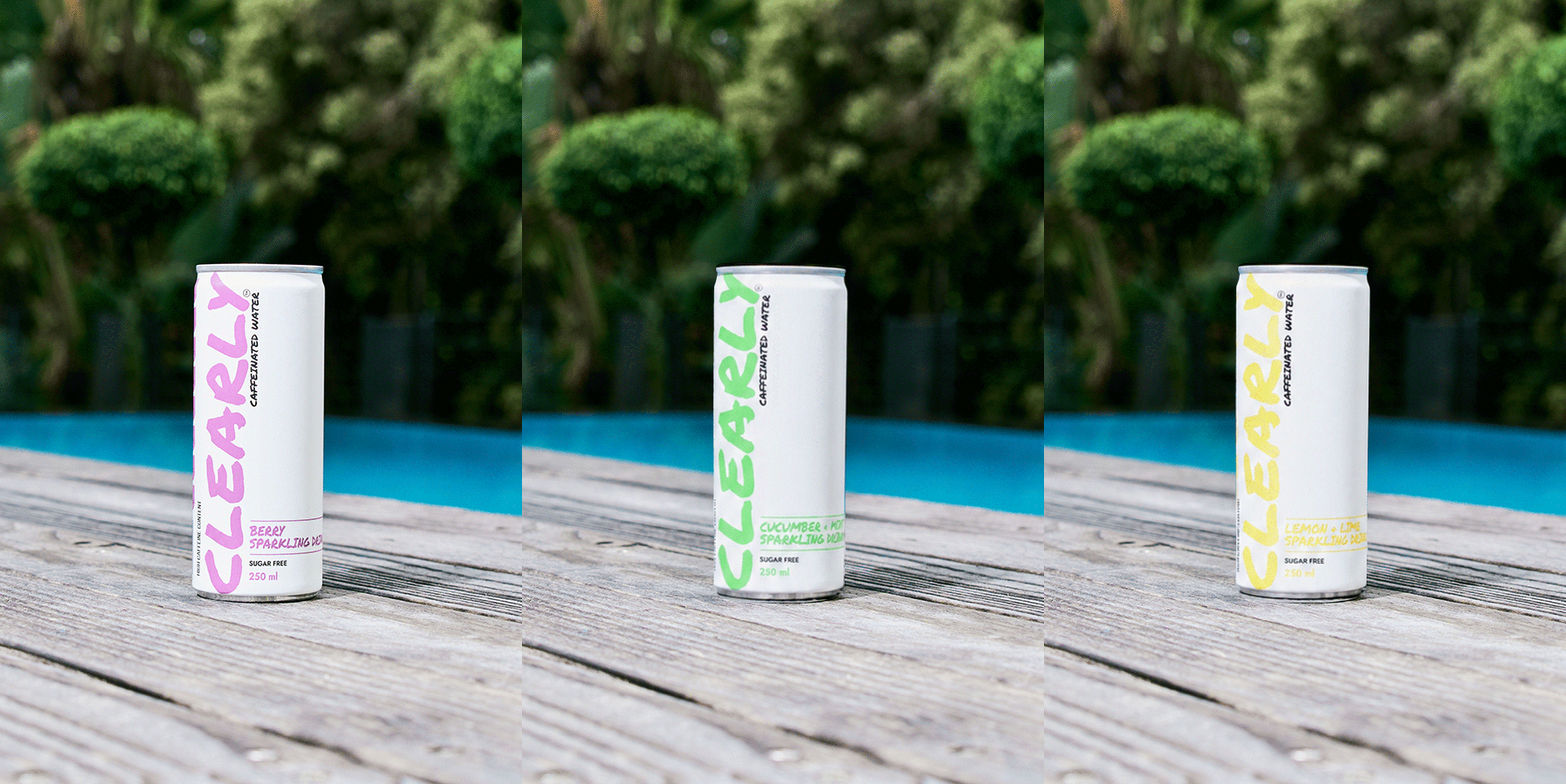
Clearly contains both caffeine and L-Theanine. This is not an accident. This is 56 million years of plant evolution finally paying off in a 250ml aluminium can.
3.5 M
BC
Pliocene Epoch
Homo Who?
Humans Arrive. Immediately Thirsty.
The genus Homo emerged roughly 3.5 million years ago on the African continent. Australopithecus africanus, Homo habilis, and eventually Homo sapiens — modern humans — spent the next several million years doing what humans do best: finding things to drink, arguing about which ones were better, and making very confident decisions with very limited information.
Water was the obvious choice. Universally available, zero sugar, zero calories, essential for survival. The problem, as our ancestors quickly discovered, was that water did not particularly help with the 3pm slump, the pre-hunt focus required for catching a Connochaetes taurinus (wildebeest), or the general demands of a very long Tuesday.
Something was missing. It would take another 3.5 million years to figure out what.
850
AD
Ethiopian Highlands
Critical Discovery
A Goat. Some Berries. History.
According to an account that has been cited so many times it must be true, an Ethiopian goat herder named Kaldi observed his goats behaving with unusual energy after consuming berries from a particular shrub. The goats, reportedly, did not sleep that night.
Kaldi, being a reasonable man in the 9th century, did what any reasonable man would do: he ate the berries himself. The result was, by all accounts, a very productive afternoon.
The plant was Coffea arabica. The compound responsible was caffeine. The discovery was one of the most consequential moments in human history, which is not something you'd typically associate with a goat, but here we are.Water was the obvious choice. Universally available, zero sugar, zero calories, essential for survival. The problem, as our ancestors quickly discovered, was that water did not particularly help with the 3pm slump, the pre-hunt focus required for catching a Connochaetes taurinus (wildebeest), or the general demands of a very long Tuesday.
Something was missing. It would take another 3.5 million years to figure out what.
Relevance to Clearly
Clearly contains 80mg of caffeine per can. Kaldi's goats would have approved. We think.
2018
AD
south africa
sugar tax
The Government Did Something Useful.
In April 2018, the South African government introduced the Health Promotion Levy — more commonly known as the sugar tax — applying a charge of R0.0221 per gram of sugar above a 4g/100ml threshold on sweetened beverages.
The beverage industry responded with the kind of urgency it usually reserves for quarterly earnings calls. Manufacturers reformulated products. Consumers started reading labels. The market began, slowly and then all at once, to shift toward healthier alternatives.
The gap in the market became very, very clear. What South Africa needed was something caffeinated that didn't read like a chemistry exam gone wrong. Something you could drink without the guilt spiral. Something that shmaaked without the consequences.
Nobody had made it yet. Two people were about to.
2023
AD
Johannesburg
origin point
Two Mates. One Idea. A Lot of R&D.
The idea was simple: caffeinated water. Zero sugar, clean ingredients, something that actually tasted good. It started the way most good ideas do — with a bad experience. Specifically, cracking open a traditional energy drink at 5am before gym and immediately feeling like a person who had made a series of questionable life choices. There had to be something better. South Africa didn't have one. So.
What followed was a period best described as organised chaos. Factory trials. R&D sessions. Flavour testing. Late nights with spreadsheets that neither of them fully understood but both pretended to. The kind of process that looks seamless in hindsight and absolutely does not feel seamless while it's happening.
The caps came first. Not because anyone sat in a boardroom and decided that was the strategy — but because the drink wasn't ready yet and doing nothing felt worse. So they made caps. Branded them. Put them on people. And something quietly remarkable happened: Clearly had a community before it had a product on a shelf. Which, if you're keeping score, is exactly the right order.
Sixty-six million years after a very large asteroid made this all possible. Worth the wait.
The actual point of all of this
Clearly is what happens when two people who shmaak life decide to make something that shmaaks back. Everything before this was just context.
66M
Years in the making
2
Founders
3
Flavours
Shmaak
The two
humans
responsible
After 66 million years of planetary preparation, it came down to two mates. A DJ and creative with an eye for what makes people show up. And a law student with an A-type personality and a very strong opinion about zesty lemons. They wanted something to shmaak. Nothing out there did. So they made it.